

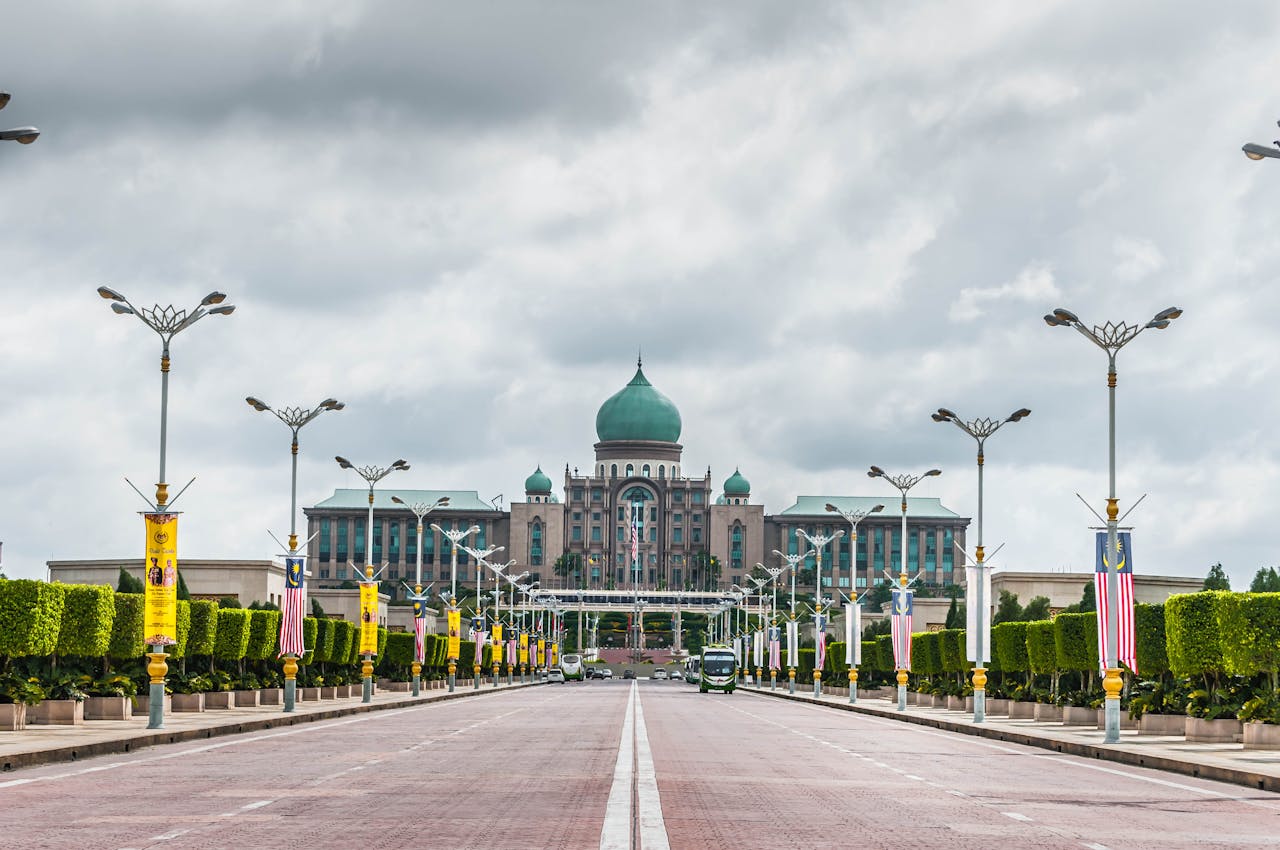
Discover Like a Local

Meet the real Singapore

Self-guided walks, neighbourhood stories, and the places locals would actually send you.

Open the map
Malaysia map
🏙️
🏖️
🏝️
Updated 6 July 2026

Explore Singapore

Discover Singapore’s iconic landmarks, hidden gems, and diverse culture with an interactive map tailored to your journey. Your adventure begins now.

Prefer to browse on a map?

Interactive map of every attraction, food spot, and stay across Singapore.

Open the map
Marina Bay Sands
Marina Bay Sands

Iconic architecture and luxury blend seamlessly for Singapore's ultimate waterfront experience →

Kuala Lumpur, Selangor & Putrajaya

Neighbourhoods worth wandering

Each district has its own rhythm, from the streets locals actually use to the corners most visitors walk straight past.

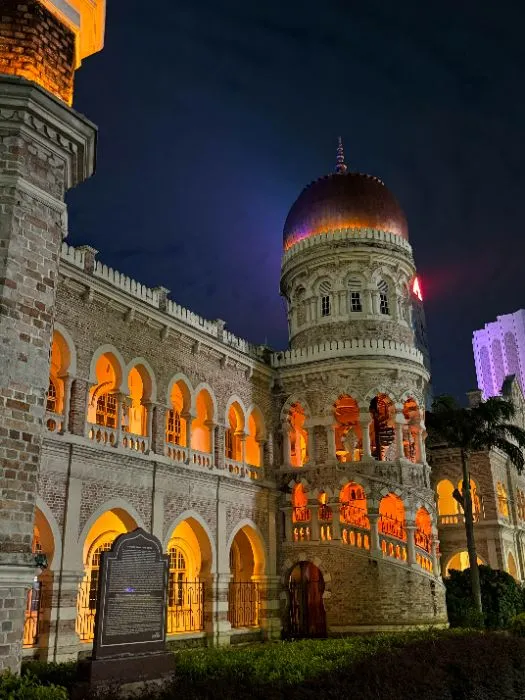
KL Colonial Walk & Merdeka Square

Walk Through Malaysia's Independence History & Colonial Heritage →

Chinatown - Petaling Street

Where Old Kuala Lumpur Comes Alive with Sights, Sounds & Flavors →

Bukit Bintang
Bukit Bintang

The Golden Triangle of Kuala Lumpur →

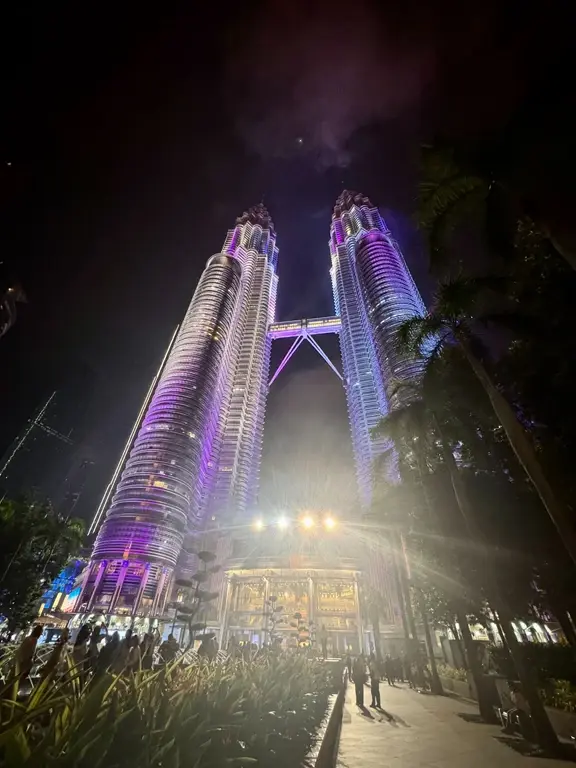
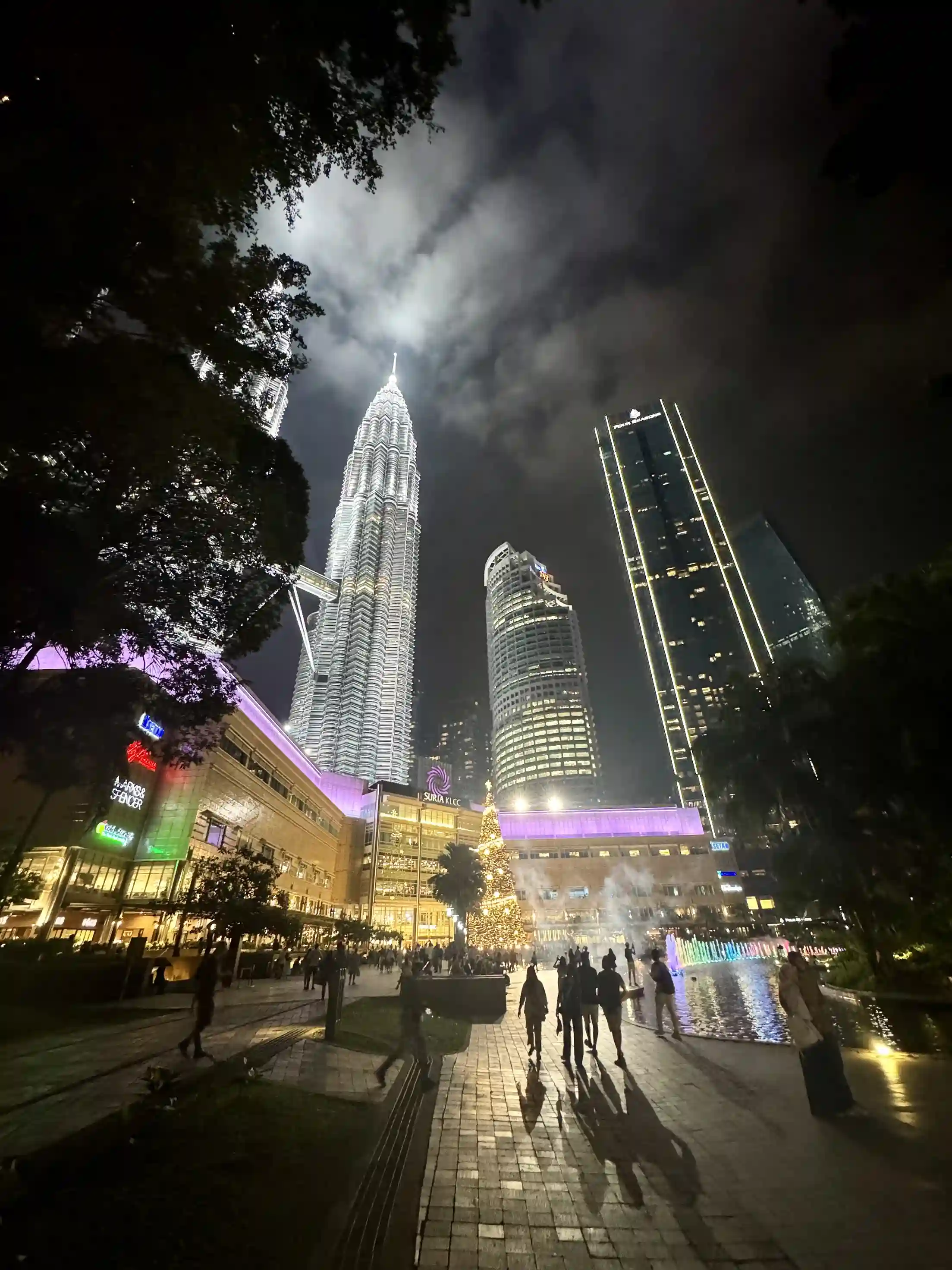
KLCC Precinct
KLCC Precinct

Where Modern Malaysia Touches the Sky →

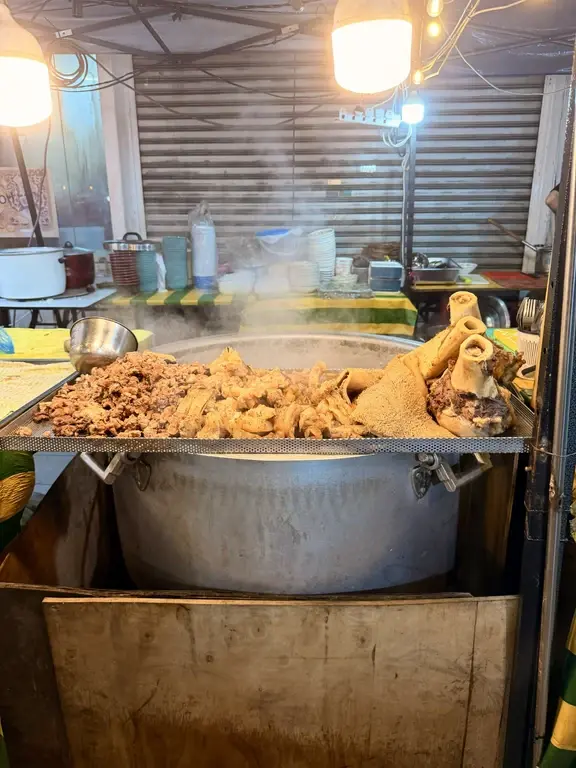
Kampung Baru & Chowkit

Discover KL's Most Authentic Malay Food Heritage Districts →

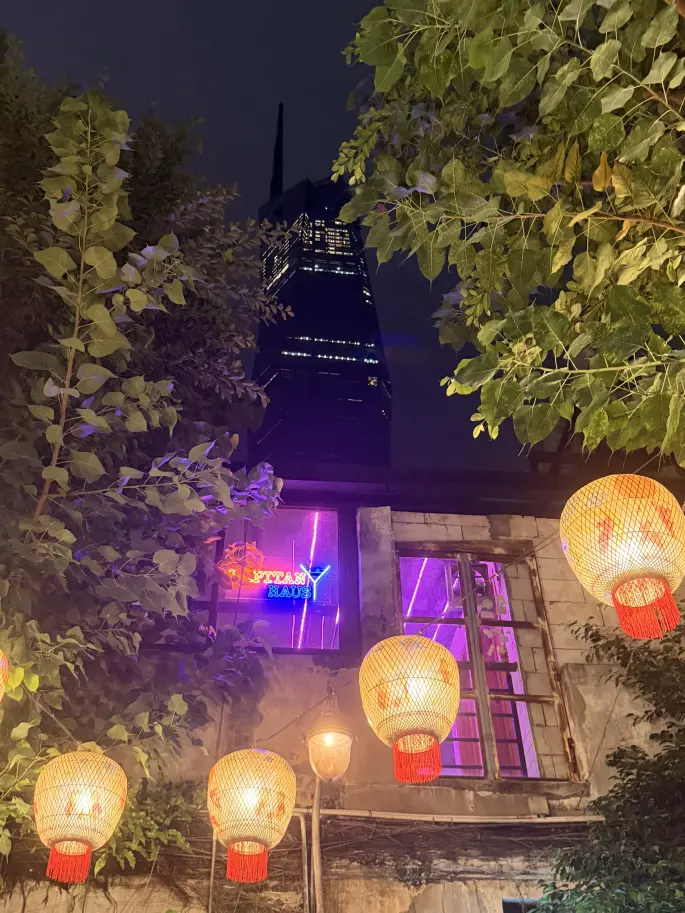
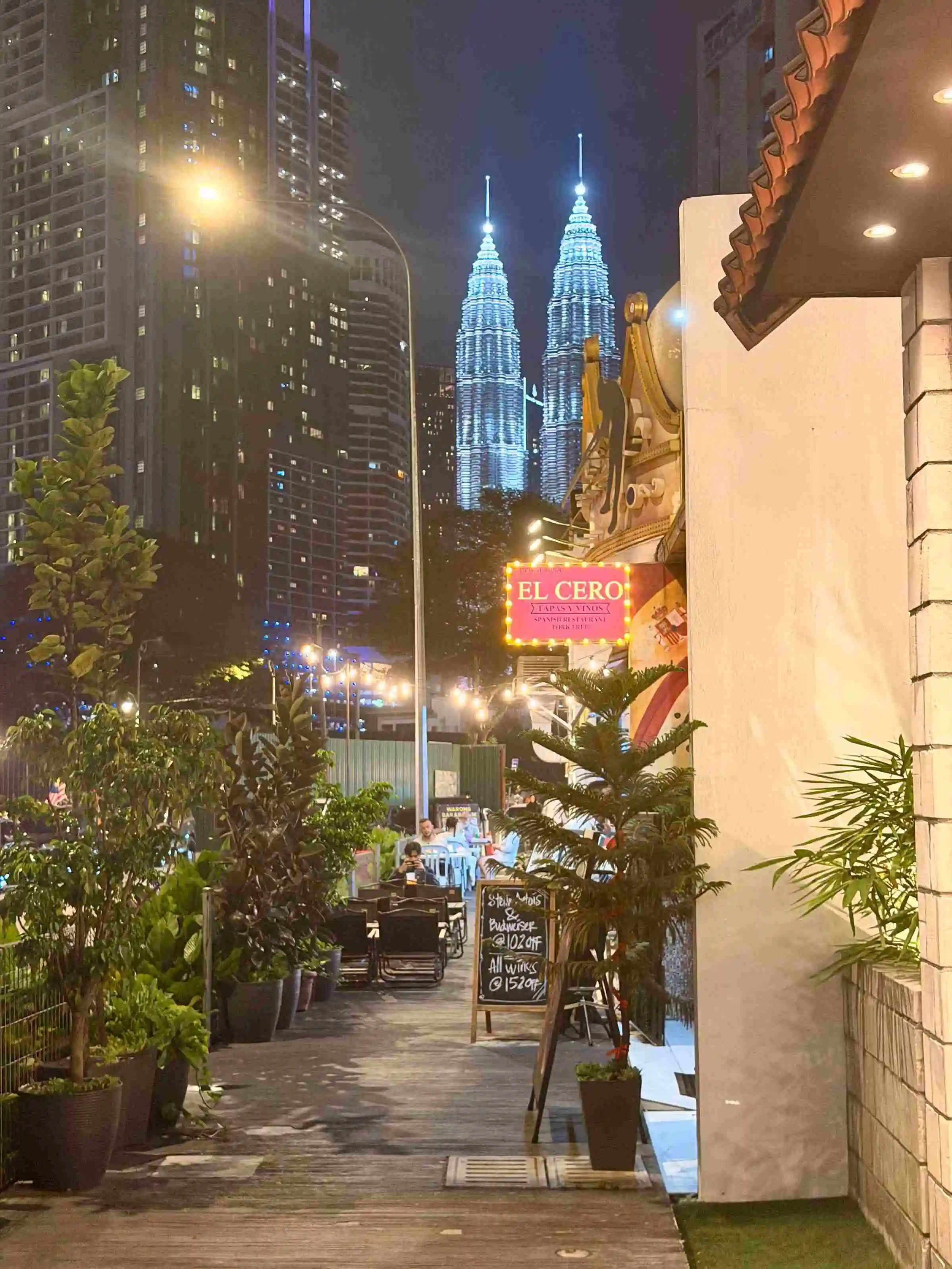
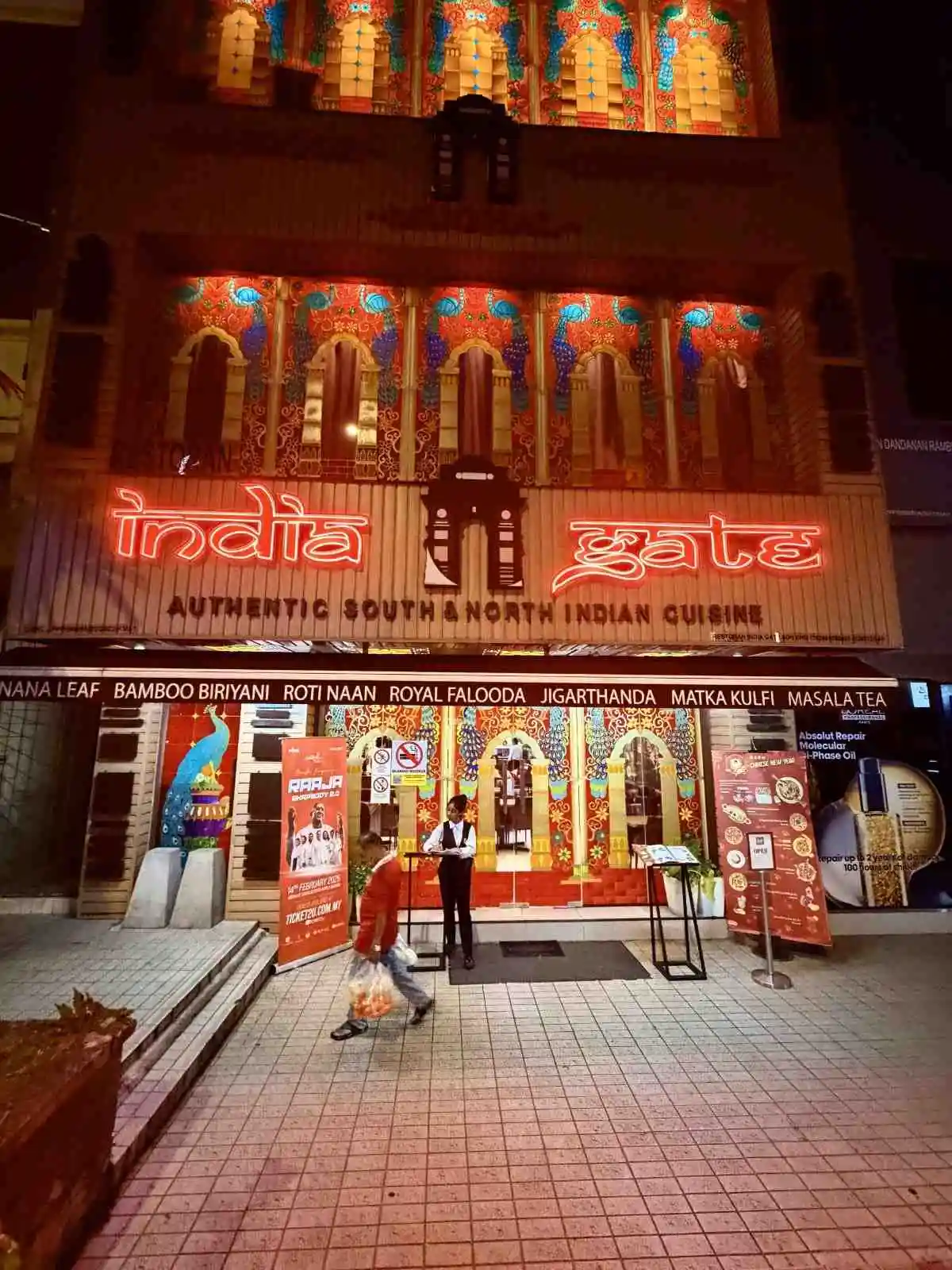
Asian Heritage Row Restaurants and Bars

KL's Premier Heritage Dining & Nightlife District →

Bangsar
Bangsar

KL's Dining & Nightlife Playground - From Hawker Stalls to Cocktail Bars →

Bukit Damansara
Bukit Damansara

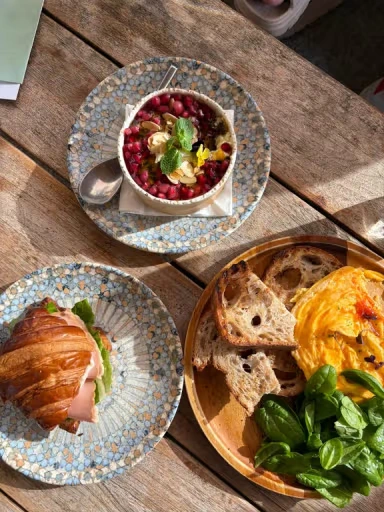
KL's Upscale Enclave for Brunch, Boutique Cafes & Fine Dining →

TTDI
TTDI

Where KL's Best Wet Market Meets Neighborhood Food Heaven →

Sekinchan
Sekinchan

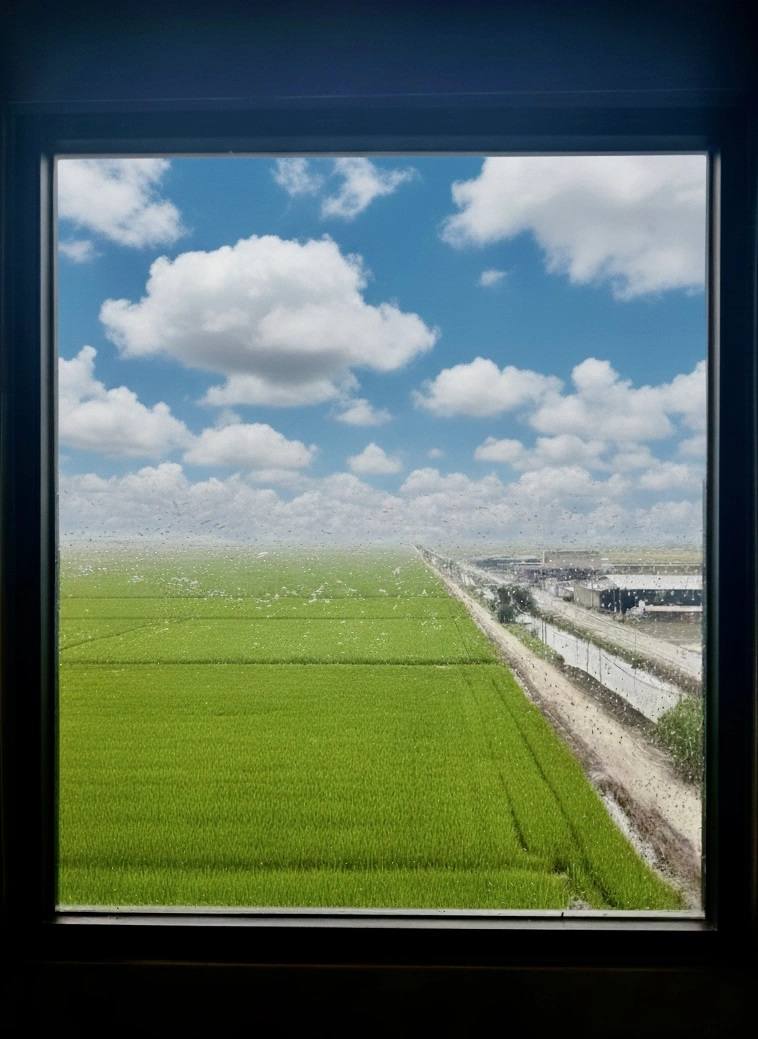
Golden Paddy Fields Meet Fresh Seafood by the Sea →

Penang Island

Neighbourhoods worth wandering

Each district has its own rhythm, from the streets locals actually use to the corners most visitors walk straight past.

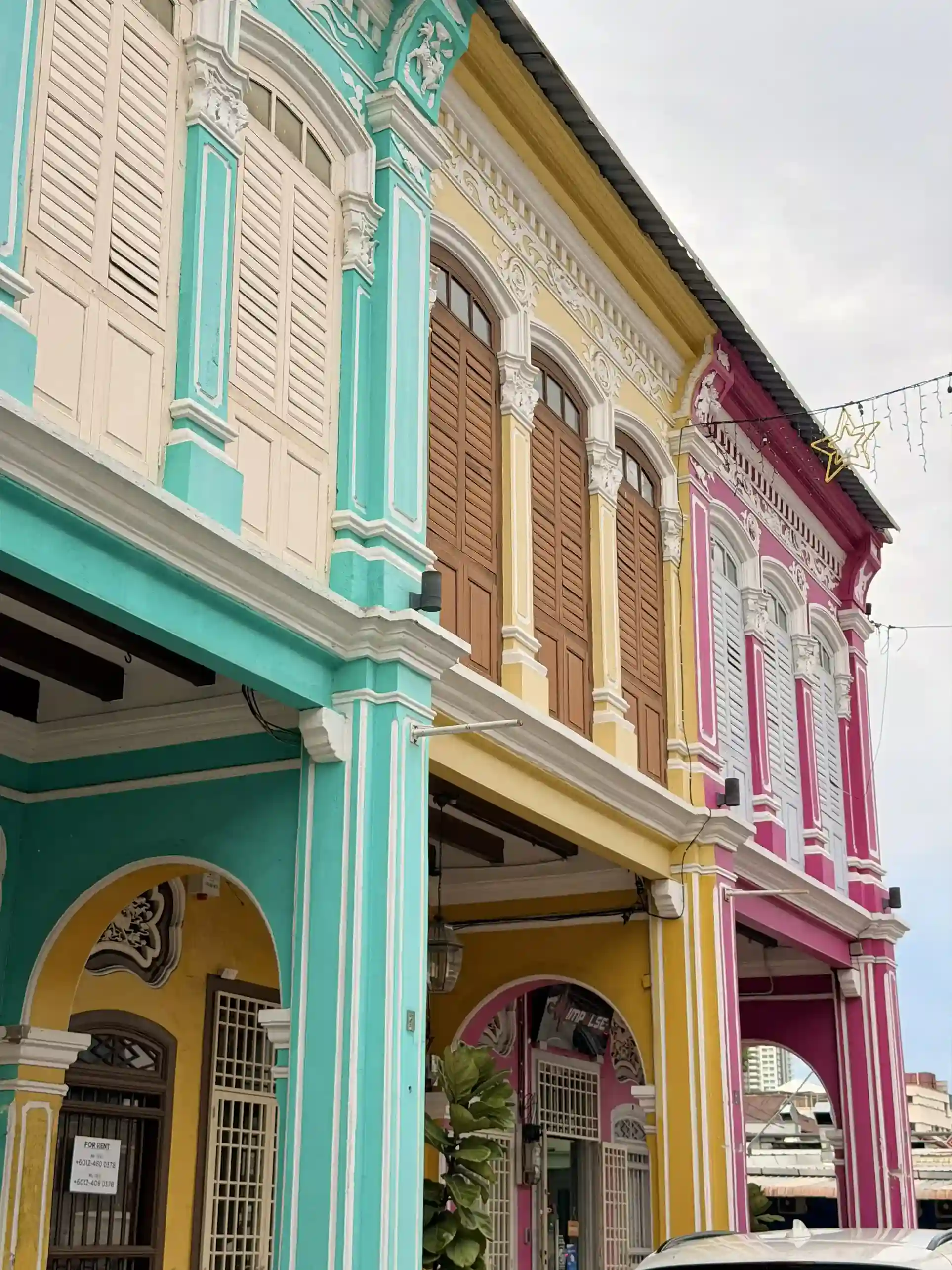
Georgetown UNESCO Heritage

UNESCO World Heritage Meets Vibrant Street Culture →

Why Loka?

The difference between visiting a place and understanding it.

Malaysia map
🏙️
🏖️
🏝️
Google shows you what exists. Loka tells you why it matters. The cultural signals that help you navigate like someone who belongs.

A tapestry of cultures

Malay, Chinese, Indian, and indigenous East Malaysian communities have shared these streets for generations, and it shows: a mosque, a temple, and a kopitiam on the same block, festivals that spill into each other's calendars, and a cuisine that borrows from every kitchen. Understanding that mix is the key to reading Malaysia.

Malay Heritage - Traditional cultural heritage, attire, and celebrations in Malaysia

Malay Heritage

Malay Heritage

The Malay community forms the largest ethnic group in Malaysia, with a rich cultural heritage deeply rooted in Islamic traditions, the Malay language, and centuries-old customs known as adat.

Heritage & History

Constitutional definition links Malay identity to Islamic faith, the Malay language, and adherence to adat (customs). The community divides into Anak Jati (indigenous coastal populations) and Anak Dagang (assimilated immigrant descendants from the broader Malay Archipelago).

Traditional Attire

Baju Kurung & Baju Kebaya

The Kurung is a loose tunic over a skirt, while the Kebaya is a fitted blouse-dress combination. Both symbolize grace and modesty in women's fashion.

Baju Melayu

Men's traditional clothing consisting of a loose tunic, trousers, sampin (sarong), and songkok (cap).

Living Heritage & Traditions

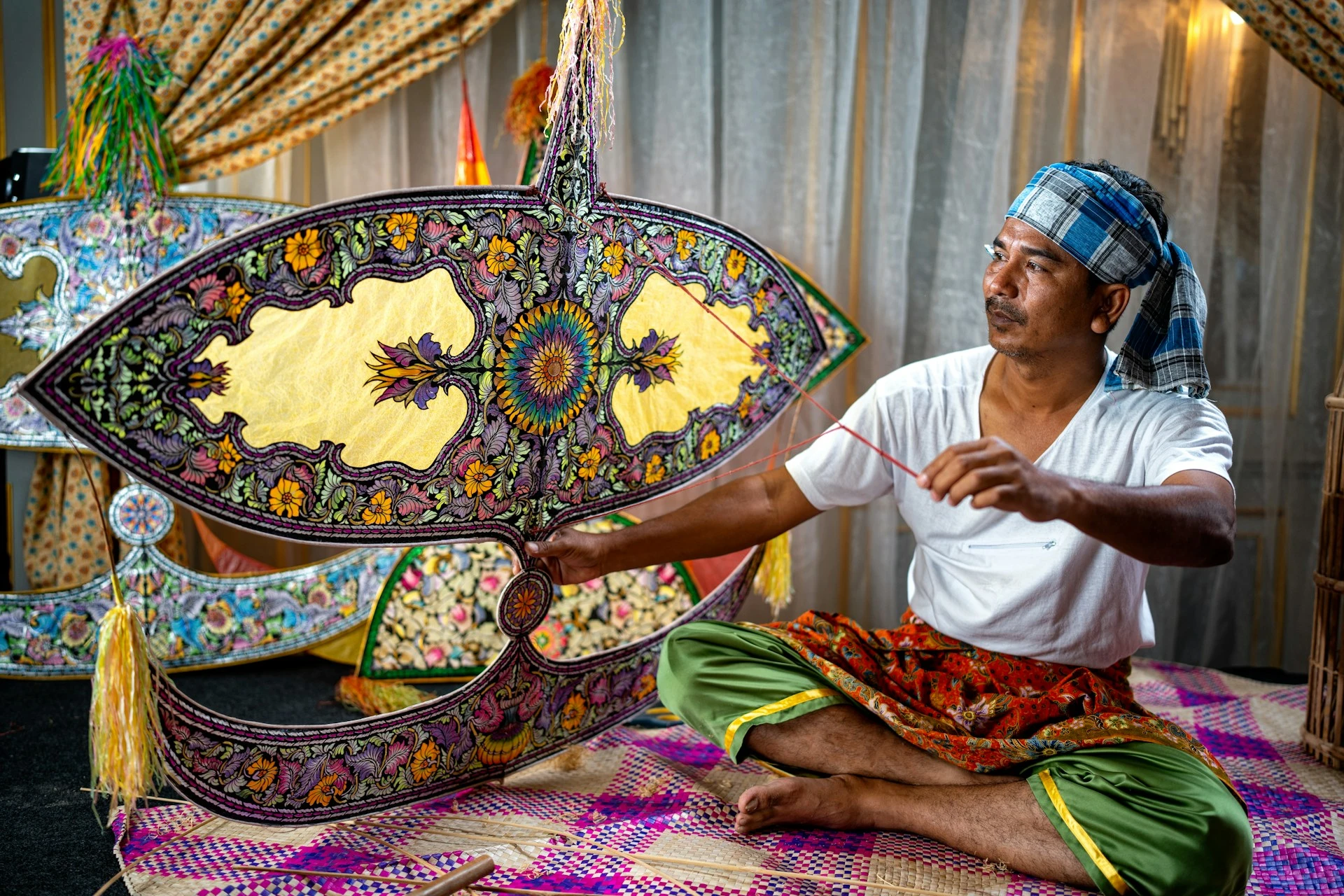
Wau Bulan

An ornate traditional kite from Kelantan featuring crescent moon shapes and floral designs, serving as both recreational activity and competitive sport.

Wayang Kulit

Shadow puppet theatre using carved leather puppets behind screens to enact epic narratives, typically from Hindu epics, accompanied by gamelan music.

Culinary Highlights

Nasi Lemak

Coconut milk-infused rice with sambal, anchovies, peanuts, and egg

Rendang

Slow-cooked meat in spiced coconut paste

Satay

Grilled seasoned meat skewers with peanut sauce
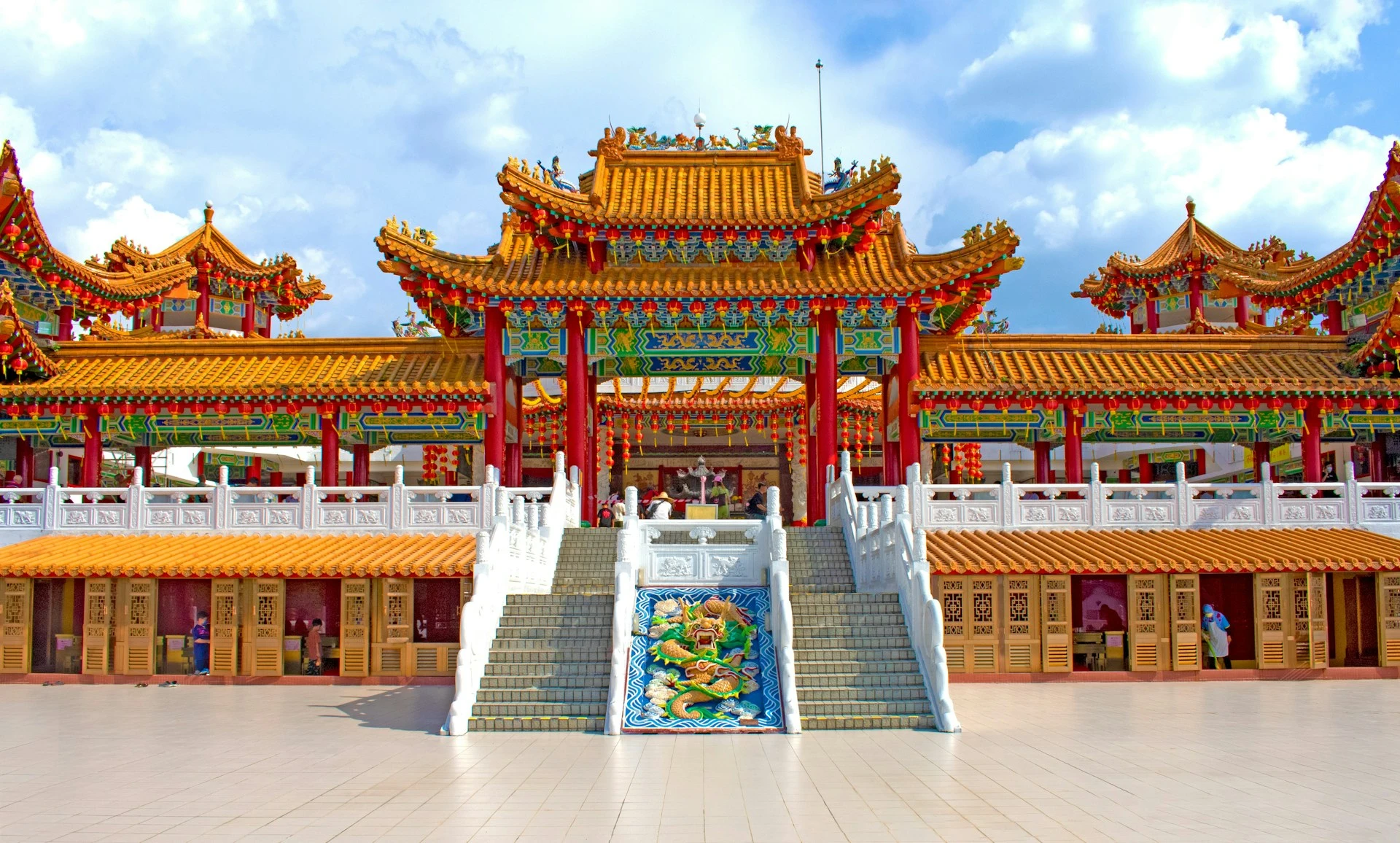
Chinese Heritage - Traditional cultural heritage, attire, and celebrations in Malaysia

Chinese Heritage

Chinese Heritage

Chinese Malaysians represent the second-largest ethnic group, with roots tracing back to Southern China, particularly Fujian and Lingnan provinces, arriving between the 19th and mid-20th centuries.

Heritage & History

The community practices Mahayana Buddhism and Taoism, often interwoven with Chinese folk religion and Confucian values. Linguistic diversity includes Hokkien, Cantonese, Hakka, Teochew, and Fuzhou dialects, with Mandarin serving as an educational lingua franca.

Traditional Attire

Qi Pao (Cheongsam)

A form-fitting dress refined from Manchu robes, featuring intricate embroidery and symbolizing feminine elegance.

Tang Zhuang (Tang Suit)

A traditional jacket with Mandarin collar and frog closures worn during festive occasions.

Living Traditions

Lion Dance

An acrobatic performance symbolizing prosperity and evil spirit dispelling, particularly prominent during Chinese New Year and business openings.

Mid-Autumn Festival

Celebrated on the 15th day of the 8th lunar month, emphasizing family reunion and gratitude through moon-gazing, lantern lighting, and mooncake sharing.

Culinary Heritage

Char Kuey Teow

Stir-fried flat noodles with seafood, soy sauce, and bean sprouts

Hainanese Chicken Rice

Poached chicken with herb-infused fragrant rice

Bak Kut Teh

Herbal pork rib soup simmered with Chinese spices

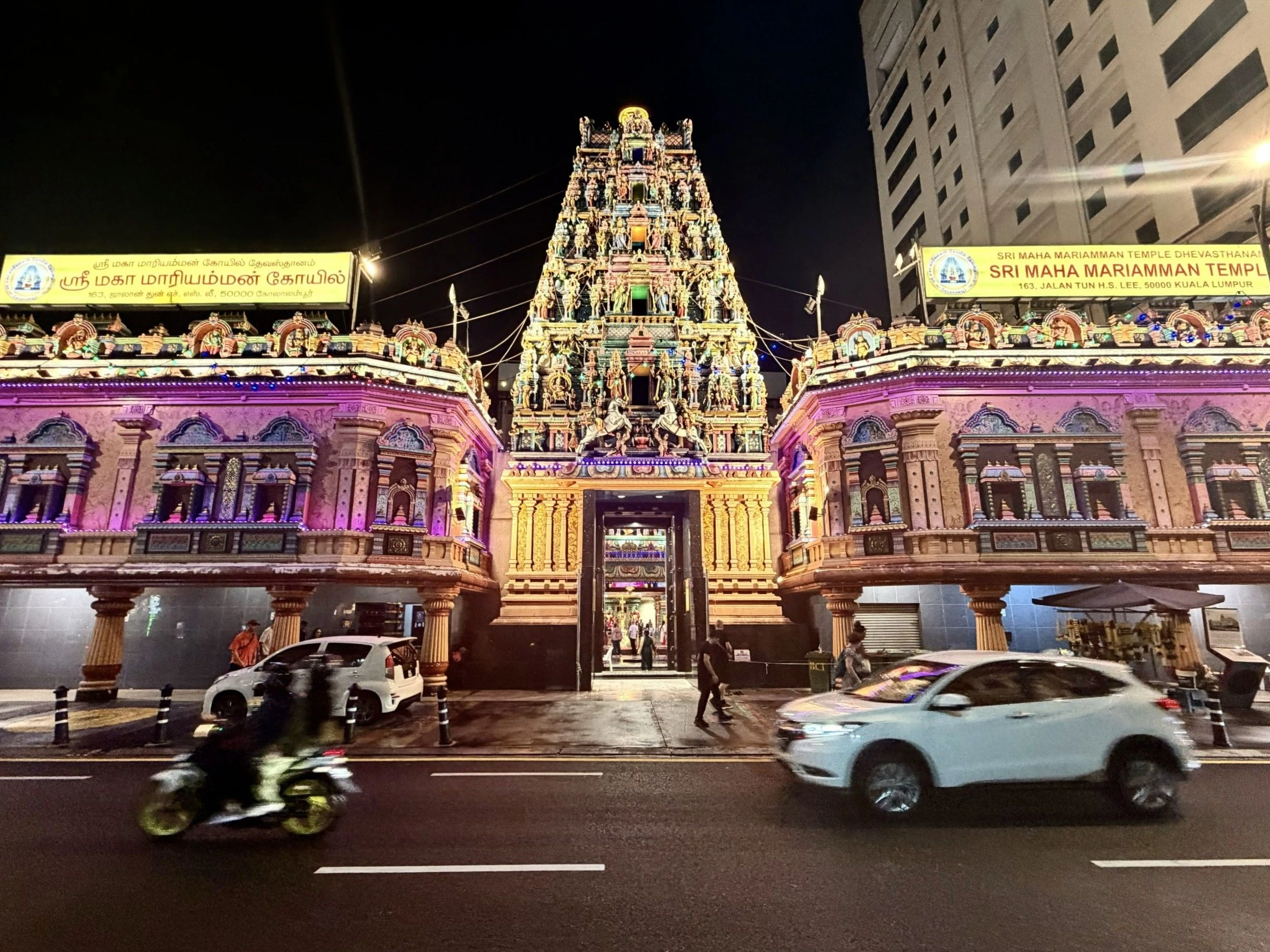
Indian Heritage - Traditional cultural heritage, attire, and celebrations in Malaysia

Indian Heritage

Indian Heritage

Malaysian Indians comprise a vibrant community predominantly Tamil with significant Telugu, Malayalee, and Punjabi populations, representing the fifth-largest overseas Indian diaspora globally.

Heritage & History

Ancient India exerted profound influence over Southeast Asia, with pre-colonial Malaysia being part of 'Indianised Kingdoms' like Srivijaya and Kadaram. Most arrived during British colonial rule for plantation and infrastructure work, later advancing into professional sectors including medicine and law.

Traditional Attire

Sari & Salwar Kameez

The Sari is an elegant unstitched drape, while Salwar Kameez features loose trousers paired with a tunic top.

Kurta & Dhoti/Veshti

Kurta is a loose collarless shirt, while Dhoti/Veshti is a rectangular unstitched cloth wrapped around the waist.

Living Heritage & Traditions

Bharatanatyam

A classical dance form featuring intricate footwork, expressive hand gestures, and facial expressions that narrate Hindu mythological stories.

Rangoli/Kolam

Intricate floor patterns created using colored rice, dyed flour, and flower petals, particularly significant during Deepavali celebrations.

Culinary Traditions

Roti Canai

Flaky flatbread served with aromatic lentil curry

Teh Tarik

Sweet, frothy milk tea known as "pulled tea"

Thosai (Dosa)

Crispy crepe made from fermented rice and lentil batter

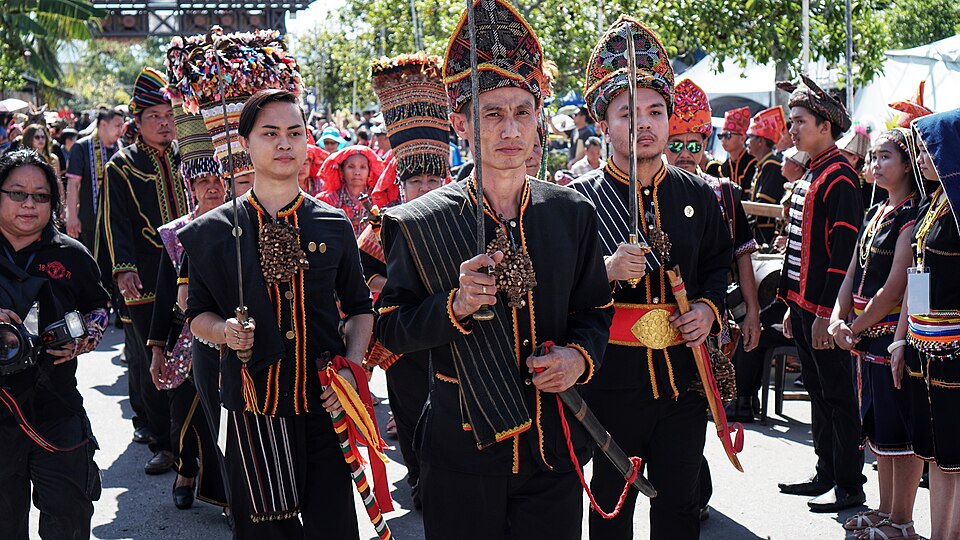
Kadazan-Dusun Heritage - Traditional cultural heritage, attire, and celebrations in Malaysia

Kadazan-Dusun Heritage

Kadazan-Dusun Heritage

The Kadazan-Dusun people are the largest indigenous ethnic group in Sabah, with a rich agrarian heritage deeply connected to rice cultivation and the reverence of nature spirits.

Heritage & History

Originating from the coastal plains and interior valleys of Sabah, the Kadazan-Dusun maintain strong animistic traditions alongside modern religious practices. Their name combines two related groups: Kadazan (coastal dwellers) and Dusun (interior agriculturalists), unified in 1995 to preserve cultural identity.

Traditional Attire

Sinuangga

Women's traditional dress featuring black velvet fabric adorned with intricate gold embroidery and beadwork, paired with the iconic himpogot (wide brass belt) and silver accessories.

Gaung & Siga

Men's traditional attire consisting of a black long-sleeved shirt (gaung) paired with black trousers (siga), complemented by a decorative headgear called sigar.

Living Heritage & Traditions

Pesta Kaamatan

The annual harvest festival celebrated every May, honoring Bambarayon (the rice spirit) and featuring traditional Sumazau dancing, beauty pageants, and buffalo races.

Sumazau Dance

A graceful dance performed with outstretched arms mimicking birds in flight, accompanied by traditional gong music and symbolizing harmony between humans and nature.

Culinary Traditions

Hinava

Fresh raw fish marinated in lime juice with ginger, shallots, and chili

Pinasakan

Fish cooked with bambangan (wild mango) and turmeric in bamboo

Lihing

Traditional rice wine fermented from glutinous rice, central to ceremonies

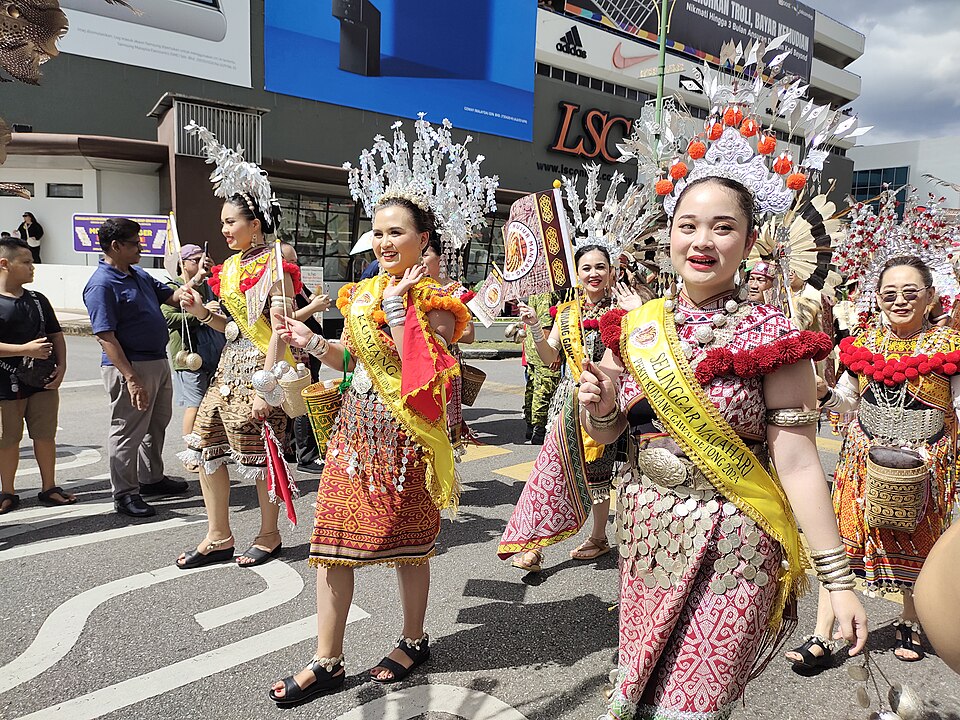
Iban Heritage - Traditional cultural heritage, attire, and celebrations in Malaysia

Iban Heritage

Iban Heritage

The Iban people are the largest indigenous group in Sarawak, comprising 28.8% of the state's population. They are renowned for their warrior heritage, intricate pua kumbu textiles, and traditional longhouse communities.

Heritage & History

Historically known as formidable warriors and seafarers, the Iban migrated from Kalimantan to Sarawak centuries ago. They maintain communal longhouse living traditions, where extended families share a single elongated structure along riverbanks, preserving collective identity and mutual support systems.

Traditional Attire

Ngepan (Kebat)

Women's traditional costume featuring a handwoven textile skirt with intricate pua kumbu patterns, paired with a beaded corset (marik empang) and elaborate silver jewelry including headbands and arm ornaments.

Baju Burung

Men's warrior attire consisting of a sleeveless jacket decorated with hornbill feathers, paired with a sirat woven loincloth and accessories like the lelanjang (war cap) adorned with feathers.

Living Heritage & Traditions

Gawai Dayak

The annual harvest festival celebrated on June 1st, marking the end of rice harvesting season with miring ceremonies (offerings to spirits), traditional dances, and communal feasting.

Ngajat Dance

A powerful warrior dance traditionally performed to celebrate victory in battle or welcome honored guests, characterized by vigorous movements and bird-like gestures accompanied by beating gongs and drums.

Culinary Traditions

Manok Pansoh

Chicken cooked in bamboo with tapioca leaves and lemongrass

Pansoh

Various meats and vegetables slow-cooked inside bamboo tubes

Tuak

Traditional rice wine served during festivals and ceremonies

Every visit to a family-run kopitiam, a heritage shophouse, or a longhouse stay helps keep these traditions in business. That is the kind of travel Loka maps.

Travel that gives back

Every recommendation on Loka points somewhere real: a family-run stall, a heritage building, a craft that's still made by hand. Spend there, and the trip pays the place back.

Protect what's precious

Shophouses, longhouses, and old trades are quietly disappearing to redevelopment. We surface the ones still standing so they stay part of the itinerary, not a footnote in a history book.

Explore with purpose

Loka surfaces the family-run kitchens and small operators alongside the household names, so your itinerary supports the neighbourhood you're walking through, not just the chains that can afford advertising.

Empower communities

Tourism dollars that stay local fund the next generation of guides, cooks, and craftspeople, the people who keep a place's identity intact instead of packaged for export.

11

Supporting UN Sustainable Development Goal 11

Supported by
Naturally Langkawi

© 2026 · Loka ·Terms and Conditions ·Privacy Policy ·Travel Tips ·Sitemap ·Contact Us