
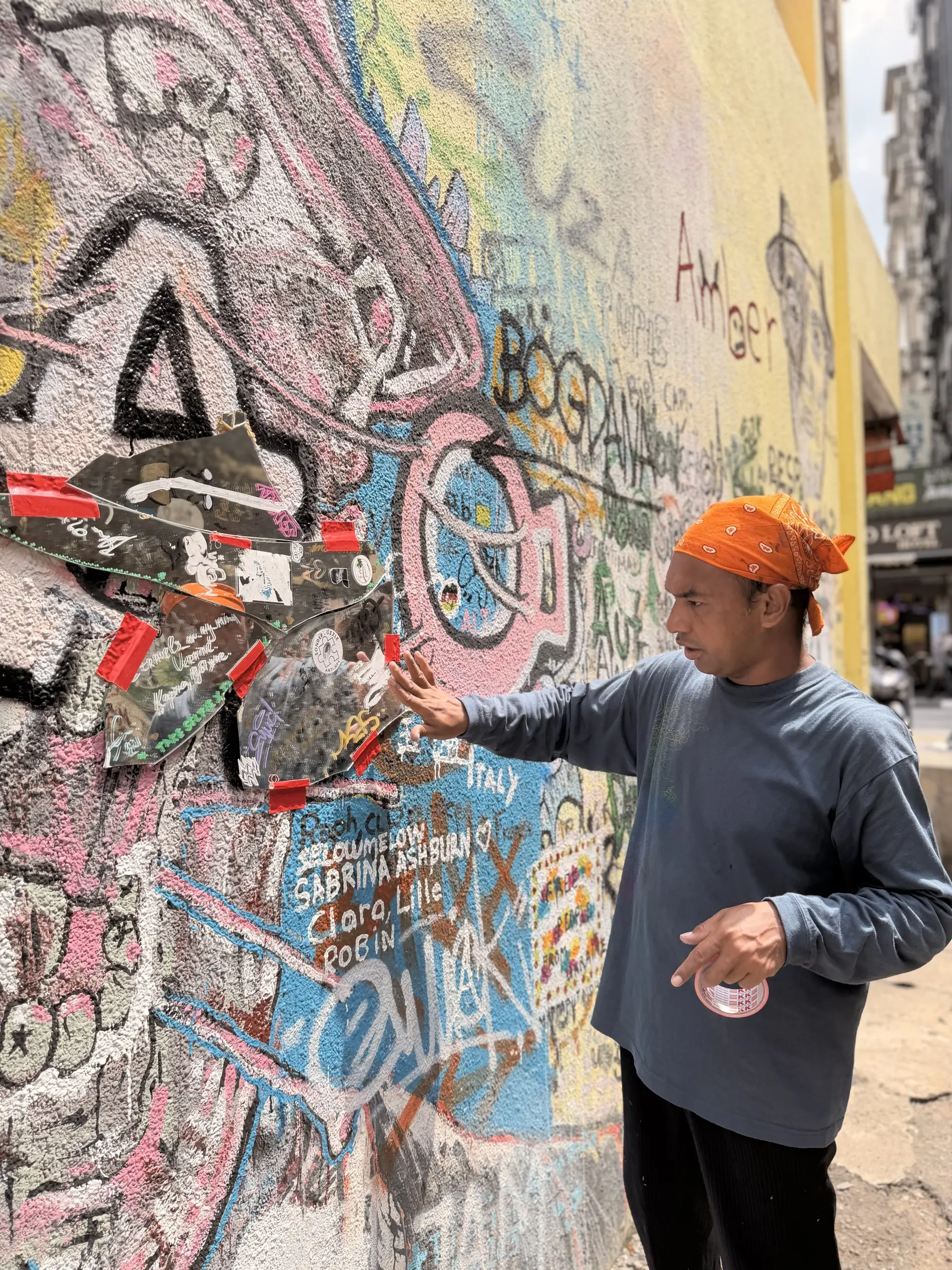
Kuala Lumpur, Wilayah Persekutuan Kuala Lumpur
Officially Lorong Panggung but branded Kwai Chai Hong (Ghost Lane), this back alley in Kuala Lumpur's Chinatown runs behind shophouses off Jalan Panggung, itself once Theatre Street, named for a Chinese theatre built by Cheow Yeok and recorded on an 1889 map. By the early twentieth century the lane had earned its Cantonese nickname for a darker reason: it was known for opium dens, gambling houses and brothels, vices its Cantonese speaking elders shorthanded as the doings of 'ghosts'. In 2018 five partners trading as Bai Chuan Management Sdn Bhd leased the row of ten derelict shophouses, spent about RM1.5 million including a RM94,255 Think City grant, and reopened the restored lane on 12 April 2019 with six murals by five Malaysian artists depicting 1960s Chinatown life. The project won Best Heritage Attraction in Kuala Lumpur at the International Travel Awards 2021 and keeps adding seasonal installations, most recently the 'Guardians of Legacy' zodiac sculptures for Chinese New Year 2026.
Theatre Street
1880s to early 1960s, English name for Jalan Panggung, the street this lane runs behind, after an 1889 map recorded a Chinese theatre built by Cheow Yeok nearby
Jalan Panggung / Lorong Panggung
renamed in the early 1960s, Panggung being Malay for stage or theatre; Lorong Panggung is the back lane behind the Jalan Panggung shophouses
Kwai Chai Hong (鬼仔巷, 'Ghost Lane' or 'Little Demon Lane')
early to mid 20th century, colloquial nickname for the lane during its years as a vice district
Kwai Chai Hong
since 12 April 2019, adopted as the official name of the restored heritage attraction
1880s
A Chinese theatre built near the street by a figure recorded as Cheow Yeok gives the area its name, appearing as Theatre Street on an 1889 map of Kuala Lumpur's Chinatown.
Early 1960s
The street is officially renamed Jalan Panggung, the Malay translation of Theatre Street; Lorong Panggung, the back lane running behind its shophouses, takes its name from the same street.
Early to mid 20th century
The back lane becomes known colloquially as Kwai Chai Hong after opium dens, gambling houses and brothels operate there, vices Cantonese speaking residents shorthanded as the work of 'ghosts'.
1956
Ho Kow Hainan Kopitiam opens on the row of shophouses, one of the few businesses on the block with a documented pre-restoration history; it later relocated temporarily during the 2018 works.
2018
Five local partners trading as Bai Chuan Management Sdn Bhd sign a 12-year master lease on the ten derelict shophouses, by then in severe disrepair, and begin clearing an estimated RM200,000 worth of accumulated rubbish.
12 April 2019
Kwai Chai Hong opens to the public after a roughly RM1.5 million restoration, including a RM94,255 Think City grant, with six murals by five Malaysian artists, Khek Shin Nam, Chan Kok Sing, Chok Fook Yong, Chew Weng Yeow and Wong Leck Min, depicting 1960s Chinatown scenes.
12 November 2021
The restoration wins Best Placemaker in the private-public space category at the Placemaker Awards ASEAN, organised by Think City and Nextdor Property Communications.
2021
Kwai Chai Hong is named Best Heritage Attraction in Kuala Lumpur at the International Travel Awards.
19 January 2025
The lane unveils its 'Bountiful Blessings' Chinese New Year art installation, a fish-themed display marking the Year of the Snake.
29 August 2025
A Mid-Autumn Festival installation inspired by the Chinese legend of Wu Gang is unveiled in the lane.
30 January to 8 March 2026
The 'Guardians of Legacy' Chinese New Year installation runs in the lane, featuring twelve 3D-printed, hand-painted zodiac sculptures inspired by traditional cloth-tiger folk art, including a 2.1 metre tall horse marking the Year of the Horse.
The six original murals
Painted directly onto the restored shophouse walls in 2019 by five Malaysian artists, Khek Shin Nam, Chan Kok Sing, Chok Fook Yong, Chew Weng Yeow and Wong Leck Min, the murals depict everyday 1960s Chinatown scenes: an elderly man playing the erhu, children playing marbles, a street calligrapher writing letters for illiterate residents, and a landlady among them.
Guangdong Xiguan-style shophouses
The ten shophouses framing the lane, six fronting Jalan Petaling and four along Lorong Panggung, were built in the Cantonese Xiguan style during the British colonial period, identifiable by narrow street-facing doors, timber-louvred windows and rear service doors originally used to move goods unseen from the front street.
QR-code storytelling
Each mural carries a QR code linking to a short audio vignette or historical note, a layer added during the 2019 restoration so visitors can listen to the story behind each scene rather than just view it.
Recycled restoration materials
Bai Chuan Management's restoration reused timber and roofing recovered from the collapsed original structures rather than replacing them wholesale, and added a red moon-gate style bridge to screen a neighbouring restaurant's drainage pipework.
Rotating seasonal art installations
Since the early 2020s the lane has hosted rotating festival displays timed to Chinese New Year and the Mid-Autumn Festival, including a fish-themed installation in January 2025 and twelve zodiac sculptures, among them a 2.1 metre horse, for Chinese New Year 2026.
Ho Kow Hainan Kopitiam
Established in 1956, this kopitiam traded on the row of shophouses for decades before the 2018 restoration and had to relocate temporarily during the works, giving the block one of its few documented pre-restoration business histories.
The back lane earned the Cantonese nickname Kwai Chai Hong, meaning Ghost Lane or Little Demon Lane, in the early to mid 20th century when it was known for opium dens, gambling houses and brothels, vices its Cantonese speaking residents shorthanded as the doings of 'ghosts'. The name stuck long after those activities ended and was formally adopted as the site's branding when it reopened as a heritage attraction on 12 April 2019.
Panggung is Malay for stage or theatre. The street was recorded on an 1889 map as Theatre Street, named for a Chinese theatre built nearby by a figure recorded as Cheow Yeok, and was given its Malay name, Jalan Panggung, in the early 1960s. Lorong Panggung, the lane where the murals stand, is the back lane running behind its shophouses.
The murals were commissioned by Bai Chuan Management Sdn Bhd, a company formed by five local partners who leased the row of ten shophouses in 2018 and unveiled the restored lane, murals included, on 12 April 2019. The project cost about RM1.5 million in total, including a RM94,255 grant from Think City.
Five Malaysian artists, Khek Shin Nam, Chan Kok Sing, Chok Fook Yong, Chew Weng Yeow and Wong Leck Min, painted the six original murals in 2019, each depicting a scene from 1960s Chinatown life such as street calligraphers, erhu musicians and children at play.
Before its 2018-2019 restoration, the lane's shophouses had fallen into severe disrepair, with collapsed roofs and rotted windows, after decades as the site of the vices that gave the lane its Kwai Chai Hong nickname. Restorers cleared an estimated RM200,000 worth of accumulated rubbish before any murals went up.
Yes. The lane was named Best Heritage Attraction in Kuala Lumpur at the International Travel Awards 2021, and its restoration won Best Placemaker in the private-public space category at the Placemaker Awards ASEAN on 12 November 2021, organised by Think City and Nextdor Property Communications.
Sources