
Kuala Lumpur, Wilayah Persekutuan Kuala Lumpur
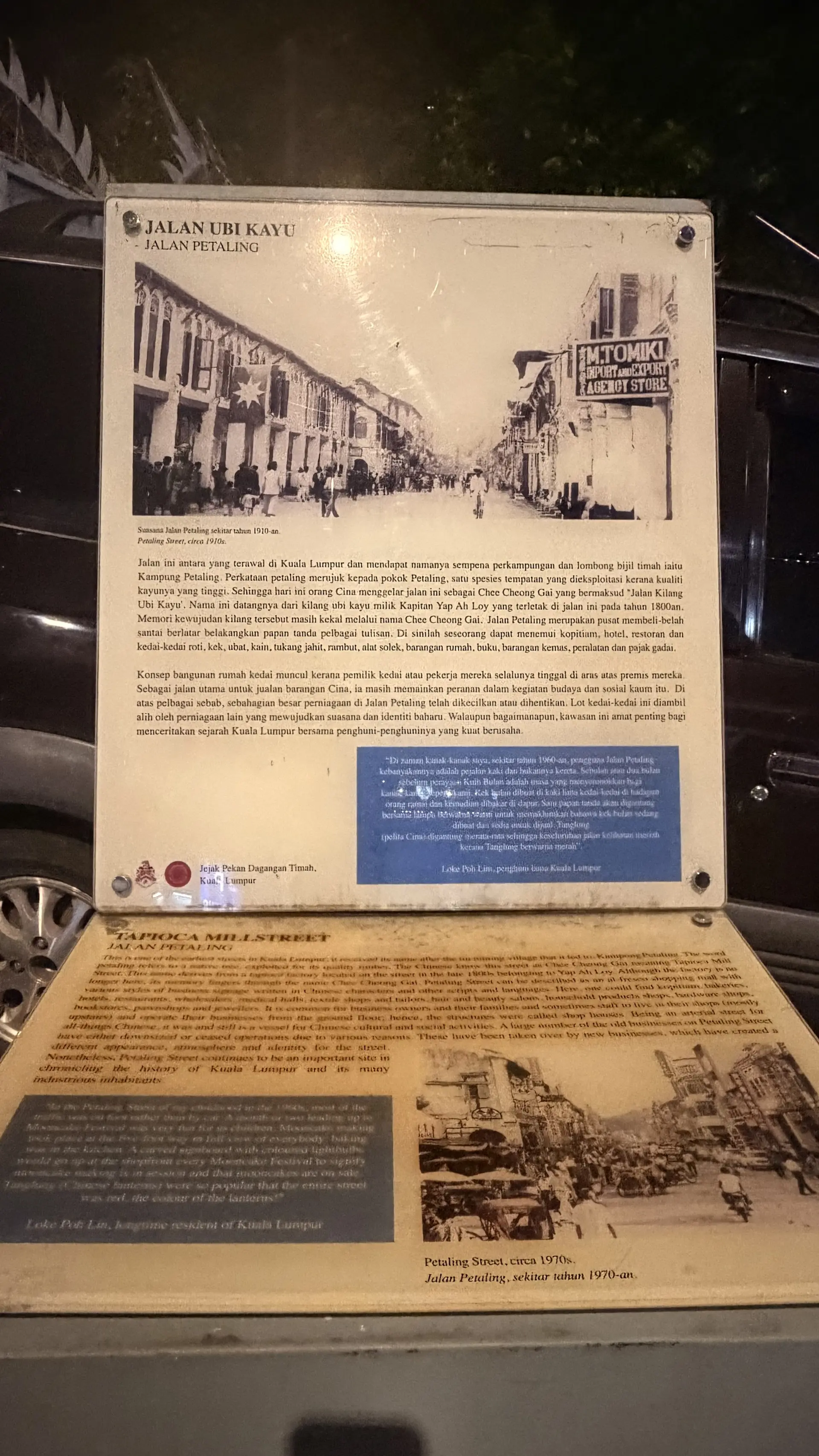
Petaling Street is the spine of Kuala Lumpur's Chinatown and one of the city's oldest streets, dating to the tin-rush settlement of the 1860s and 1870s. Its Cantonese name, Chee Cheong Kai (Starch Factory Street), remembers the tapioca mill that Kapitan Yap Ah Loy, the Chinese headman who rebuilt Kuala Lumpur after the Selangor Civil War, ran on the street to keep the economy alive when the tin mines flooded. Rebuilt in brick shophouses after the great fire and flood of 1881, the street received its landmark green 'dragon' canopy and Chinese arch gateways in a RM11 million facelift in 2003, when it was fully pedestrianised. A heritage revival led by the restored Kwai Chai Hong laneway and the REXKL cultural hub, both launched in 2019, now runs alongside the famous night market.
Chee Cheong Kai (Starch Factory Street)
Cantonese name, from Yap Ah Loy's tapioca mill
Jalan Petaling
Official Malay name
Chinatown KL
Common usage for the surrounding quarter
1860s-1870s
Petaling Street takes shape in early tin-rush Kuala Lumpur, but the settlement is repeatedly devastated during the Selangor Civil War as rival factions fight for control of the mines and town.
1870s-1880s
Kapitan Yap Ah Loy rebuilds Kuala Lumpur and, when flooded mines idle the tin economy, opens a tapioca mill on the street where tubers from his farms are ground into flour. The mill gives the street its enduring Cantonese name, Chee Cheong Kai, meaning Starch Factory Street.
1881
A fire and then a flood destroy much of Kuala Lumpur in the same year. The town is rebuilt in brick and tile, producing the rows of shophouses that still line Petaling Street and its side lanes.
1873 and 1888
Two of the quarter's great temples rise beside the street: the Sri Mahamariamman Temple (1873), Kuala Lumpur's oldest Hindu temple, on Jalan Tun H.S. Lee, and the Taoist Guan Di Temple (1888) opposite it.
2003
An RM11 million facelift pedestrianises the street, adds ornamental Chinese arch gateways at both ends, and roofs the market stretch with the green canopy nicknamed the Green Dragon.
2019
The heritage revival arrives: Kwai Chai Hong, a restored back lane of 1960s Chinatown murals, opens in April, and the 1940s-era Rex cinema reopens as the REXKL arts and community hub, drawing a new wave of cafes and galleries to the shophouses.
The Green Dragon canopy
The green translucent roof over the market stretch, added in the 2003 facelift together with two paifang arch gateways, turned the open-air bazaar into an all-weather covered market.
Chee Cheong Kai heritage
The Cantonese street name preserves the memory of Yap Ah Loy's tapioca starch mill, an early example of Kuala Lumpur diversifying beyond tin.
Post-1881 shophouses
The brick shophouses lining the street and its lanes date from the rebuilding of Kuala Lumpur after the 1881 fire and flood, when timber-and-thatch construction was banned.
Temple cluster
Within a block stand the Sri Mahamariamman Temple (1873), the Guan Di Temple (1888), and the ornate Chan She Shu Yuen clan house (completed early 1900s), marking the quarter's layered Hindu, Taoist, and clan traditions.
Kwai Chai Hong
A once-derelict lane off Petaling Street restored and opened in April 2019, its murals recreating 1960s Chinatown life; it has become one of KL's most photographed corners.
REXKL
The former Rex cinema, which burned and was rebuilt more than once since the 1940s, reopened in 2019 as an arts, bookshop, and food hub that anchors Chinatown's creative revival.
Chee Cheong Kai is Cantonese for Starch Factory Street. Kapitan Yap Ah Loy operated a tapioca mill on the street in the late 1800s, grinding tubers from his farms into flour to keep Kuala Lumpur's economy going when the tin mines flooded, and the name stuck.
It is one of Kuala Lumpur's original streets, emerging with the tin-mining settlement in the 1860s and 1870s. The brick shophouses that define it today date from the rebuilding after the 1881 fire and flood that destroyed most of the early wooden town.
In 2003, as part of an RM11 million facelift that pedestrianised Petaling Street, installed Chinese arch gateways at both ends, and covered the central market stretch with the green canopy nicknamed the Green Dragon.
A restored laneway just off Petaling Street that opened in April 2019, decorated with interactive murals recreating 1960s Chinatown street life. Its name is Cantonese, commonly rendered as Little Ghost Lane, and its restoration kicked off the quarter's ongoing heritage revival.
Yap Ah Loy was the Kapitan Cina, the Chinese community headman, who rebuilt Kuala Lumpur after the Selangor Civil War in the 1870s. He owned much of the early town, and his tapioca starch mill on Petaling Street gave the road its Cantonese name, Chee Cheong Kai.
Sources